Understanding Barrel Char Levels and Their Effect on Spirits
June 27, 2026
How Temperature and Climate Affect Barrel Maturation
June 29, 2026
Key Takeaways
- Unlike new oak, used barrels age spirits with more subtleties and can be, without a doubt, more complex.
- There are a multitude of factors affecting the age of the spirit, such as the type of spirit, the history of the barrel, and the conditions of the warehouse.
- Used whiskey and wine barrels tend to have specific flavor profiles and characteristics that enhance finishing and specialty releases.
- As a result, oak barrels for sale should be evaluated for the flavors they impart and the goals and strategies of the barrel owner.
A spirit could be in a used barrel too long and miss an interesting complexity. Leave it too long, and the balance between spirit and wood may start to disappear. That’s why the old hands don’t depend on the calendar alone.
The appropriate aging time is determined by several factors, including the type of spirit, what the barrel previously held, and the taste profile the maker aims for. If you are considering oak barrels for sale for a new program or exploring finishing options with used casks, it is important to understand how used barrels behave.
Why do used barrels mature spirits differently
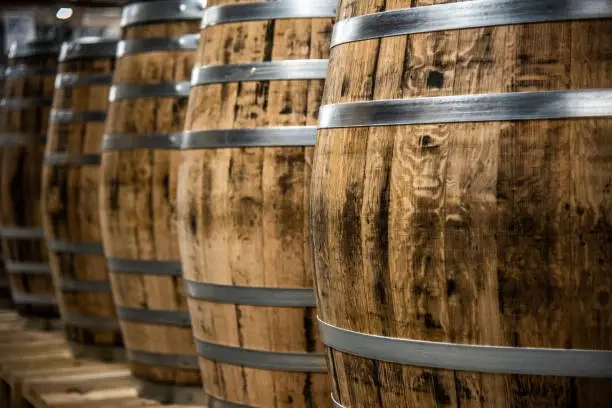
By nature, used barrels are barrels that have housed other wines or spirits. They are still capable of aging, but without the fresh, more pronounced oak flavors.
The first aging process removes many of the wood’s flavoring constituents, such as vanillin, tannins, and caramelized sugars.
These chemicals persist even after multiple uses, just at lower concentrations.
This can lead to used barrels containing:
- More delicate oak influence
- More emphasis on the original nature of the spirit
- Flavor layering
- Unique finishing options based on barrel history
For many distilleries, these characteristics are exactly what make used barrels attractive.
There Is No Standard Aging Timeline
There’s a common myth in distilling that all spirits require the same aging time.
A combination of factors can determine aging:
- spirit type
- Barrel size
- Former barrel contents
- Warehouse environment
- Targeted flavor profile
- Proof in the barrel
Two distilleries could utilize the same barrels and get completely different results. It’s not a schedule; it’s the spirit dictating the right timescale.
How Barrel History Influences Maturation
The barrel’s previous contents significantly affect how the next spirit develops.
Used Whiskey Barrels
Many distilleries try to find used whiskey barrels because they can introduce new, yet subtle, flavor components to the spirit, like whiskey, vanilla, spices, melted caramel, and sweet oak.
These barrels are typically used for:
- Aging in rum
- Whisky aged in a secondary
- Release experimental
- Specialty finishes
Used Wine Barrels
Craft winemakers are increasingly interested in used wine barrels for sale to develop unique flavor profiles.
Wine-seasoned barrels may play a role:
- Red fruit features
- Berry complexity
- Soft Tannins
- Hints of spice
Those effects might grow stronger with time, and regular evaluation is especially crucial.
Warehouse Conditions Shape the Aging Process
The maturation environment plays a major role in determining how quickly flavors evolve.
Temperature Fluctuations
Seasonal temperature changes encourage the spirit to move in and out of the woods.
Greater fluctuations often lead to:
- Faster extraction
- Accelerated flavor development
- Increased evaporation
More stable conditions typically promote slower, gradual maturation.
Humidity Levels
Humidity may affect evidence of changes with aging and evaporation patterns.
Distilleries tend to adjust their aging techniques to suit the local environment, particularly when large inventories are involved.
Tasting Matters More Than the Calendar
The best way to know if a spirit is ready is to assess it using your senses regularly.
Experienced producers evaluate maturation by checking:
- Aroma development
- Oak integration
- Mouthfeel
- Balance of Flavors
- Overall Complexity
Something important to note about spirit maturation is that maturation timelines may be established, but the barrels are actually filled at the appropriate time. This is important, especially since marinating spirits in used barrels proceeds more slowly.
The Role of Used Barrels in Finishing Programs
Finishing refers to the maturation process that occurs when the spirit is transferred to another barrel for additional aging and refinement.
This added complexity, without overwhelming the spirit, is why most finishing programs utilize previously used barrels.
Common finishing methods include:
- Wine barrel finishing
- Whisky barrel secondary maturation
- Specialty cask trials
- Limited editions
These strategies allow producers to create unique items and broaden their portfolios.
Choosing the Right Barrel Strategy
When evaluating oak barrels for sale, distilleries should consider more than availability.
Important questions include:
- What flavor profile are we trying to achieve?
- What level of barrel activity is appropriate?
- What did the cask previously contain?
- How will local warehouse conditions affect maturation?
- Is the barrel intended for primary aging or finishing?
Selecting barrels with care helps an organization achieve product consistency and gain an operational advantage in the market.
For example, numerous producers prefer to buy Jack Daniel’s distillery barrels for sale because they have a history of maturation and an authentic origin.
Conclusion
The optimal duration for aging spirits in used barrels depends on various factors, including the barrel’s history, the environment, the type of spirit, and the producers’ goals.
Whether you are evaluating oak barrels for sale, looking for used whisky barrels for sale, investigating used wine barrels for sale, or simply enhancing your operations at a growing barrel distillery, patience and evaluation still have their role.
In the end, time is never the determining factor in aging. It is the spirit itself.
Frequently Asked Questions
Q. How does warehouse temperature affect aging in used barrels?
Ans: Generally, larger temperature variations in the cask’s environment lead to a correspondingly higher rate of aging. More stable and cooler environments lead to slower aging of the spirit.
Q. How do distillers know when a spirit is ready to bottle?
Ans: This is a highly subjective determination, primarily based on experience and sensory evaluations. To determine whether a barrel is ready, producers evaluate aroma, flavor balance, mouthfeel, oak intensity, and overall complexity.
Q. Does barrel history influence aging time?
Ans: Yes. If a barrel previously held wine, bourbon, or another spirit, it will uniquely influence the next fill’s flavor and maturation.
Q. Are used barrels better than new barrels for finishing spirits?
Ans: Used barrels are typically seen as superior for finishing because they add layers of complexity but minimal oak effect. The previous contents of the barrel can add unique characteristics to improve the product.